Quick answer
HEIC is 40-50% smaller at identical quality. JPG is 30 years old and works everywhere. Convert to JPG for sharing with anyone using Windows, older devices, or non-Apple software. Keep HEIC if you only share within Apple ecosystem.
Your iPhone defaults to HEIC because Apple spent years perfecting the compression. JPG exists on every device made since 1992. The result is a collision between optimization and compatibility that defines modern photo storage.
File size: HEIC wins decisively
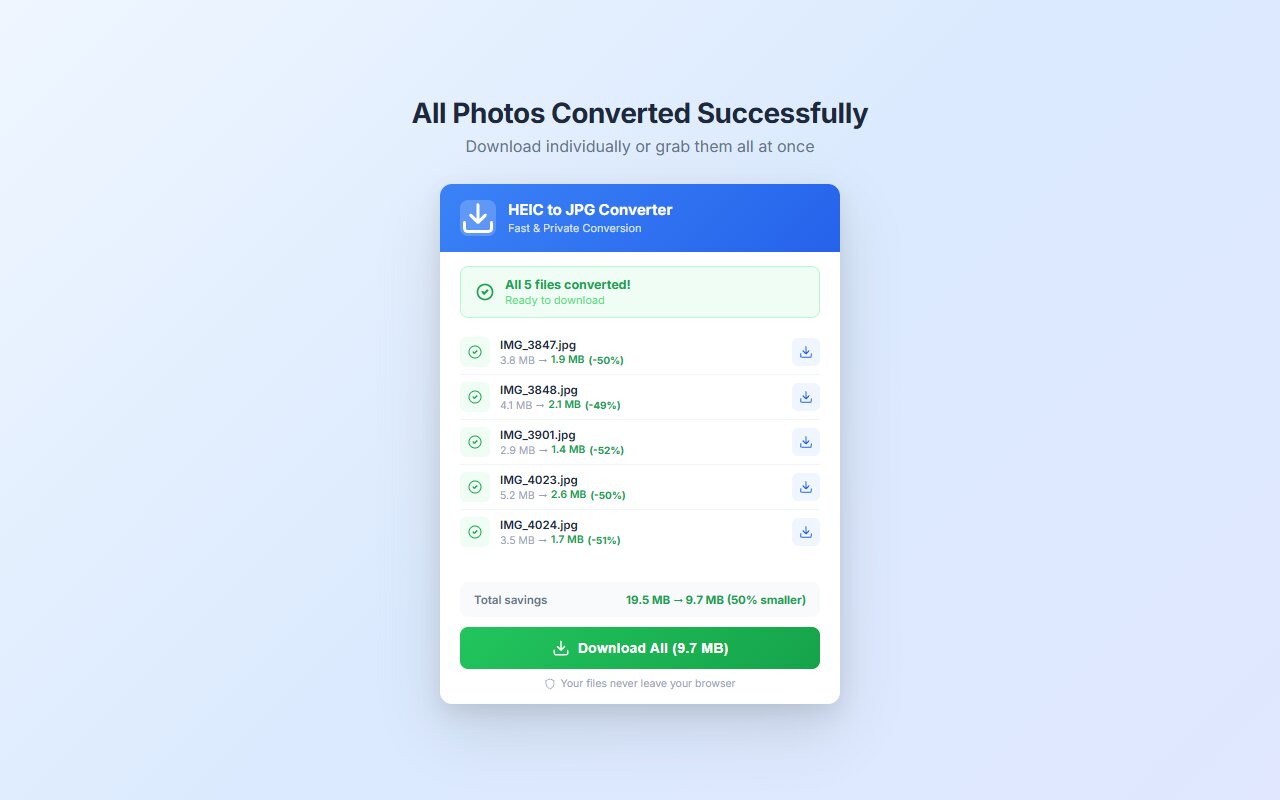
At identical visual quality, HEIC files are 40-50% smaller than JPG:
- iPhone 14 Pro portrait photo in HEIC: ~2.8 MB
- Same photo converted to JPG at 90% quality: ~5.2 MB
- Savings across 1,000 photos: ~2.4 GB recovered
This is why Apple switched: cloud storage costs money, and HEIC cuts Apple iCloud storage costs by half for the same quality.
Compatibility: JPG wins completely
What opens HEIC:
- Apple devices: iPhone, iPad, Mac (100% support).
- Android 10+: Google Photos, some Android phones.
- Windows: nothing native.
- Linux: only with additional codecs.
- Websites: most reject HEIC, want JPG or PNG.
What opens JPG:
- Every device, browser, website, email client (100% universal).
Quality: Both are "good enough"
At the same compression level:
- HEIC 85%: visually identical to JPG 90%.
- HEIC 95%: matches JPG 99% with half the file size.
- HEIC 100%: lossless, only useful for archival (file size no longer an advantage).
For casual sharing, either format is imperceptible. For professional photography, both formats compress enough that you lose shadow detail. Shot in RAW if you need to edit.
When to keep HEIC
- Personal iCloud backup: iCloud integrates HEIC, saves storage cost.
- Sharing only within Apple ecosystem: Friends and family with iPhones see native thumbnails.
- Archiving for future editing: HEIC with Apple's computational photography layers (Portrait Mode, Night Mode) preserve more editing data than flattened JPG.
When to convert to JPG
- Emailing to Windows users: Outlook often rejects HEIC as unknown type.
- Uploading to websites: Most content management systems want JPG or PNG.
- Sharing on cloud storage (non-Apple): Google Drive, Dropbox, OneDrive may not render HEIC previews.
- Social media: Instagram, Twitter, Facebook accept HEIC but convert it to JPG on their servers. Might as well do it yourself.
- Professional documents: Contracts, resumes, legal filings expect JPG.
At-a-glance comparison
| Aspect | HEIC | JPG |
|---|---|---|
| File size at same quality | 40-50% smaller | Baseline |
| Device support | Apple + Android 10+ | Universal (100%) |
| Website compatibility | ~60% of sites | 100% of sites |
| Email compatibility | Often rejected | Always works |
| Editing metadata preserved | More (computational) | Less (flattened) |
| Best use case | Personal backup | Sharing + archival |